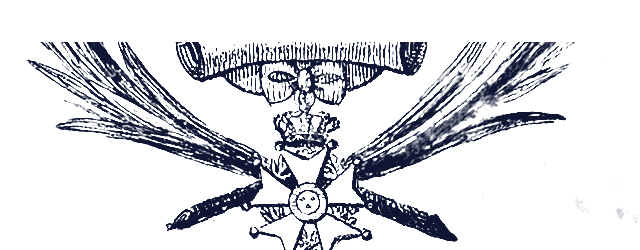
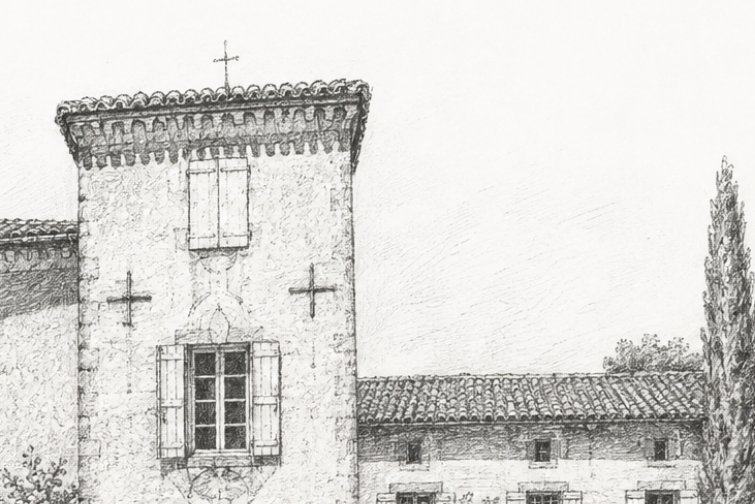
Gravure du Château du Falga

History of the house

History of the Château du Falga

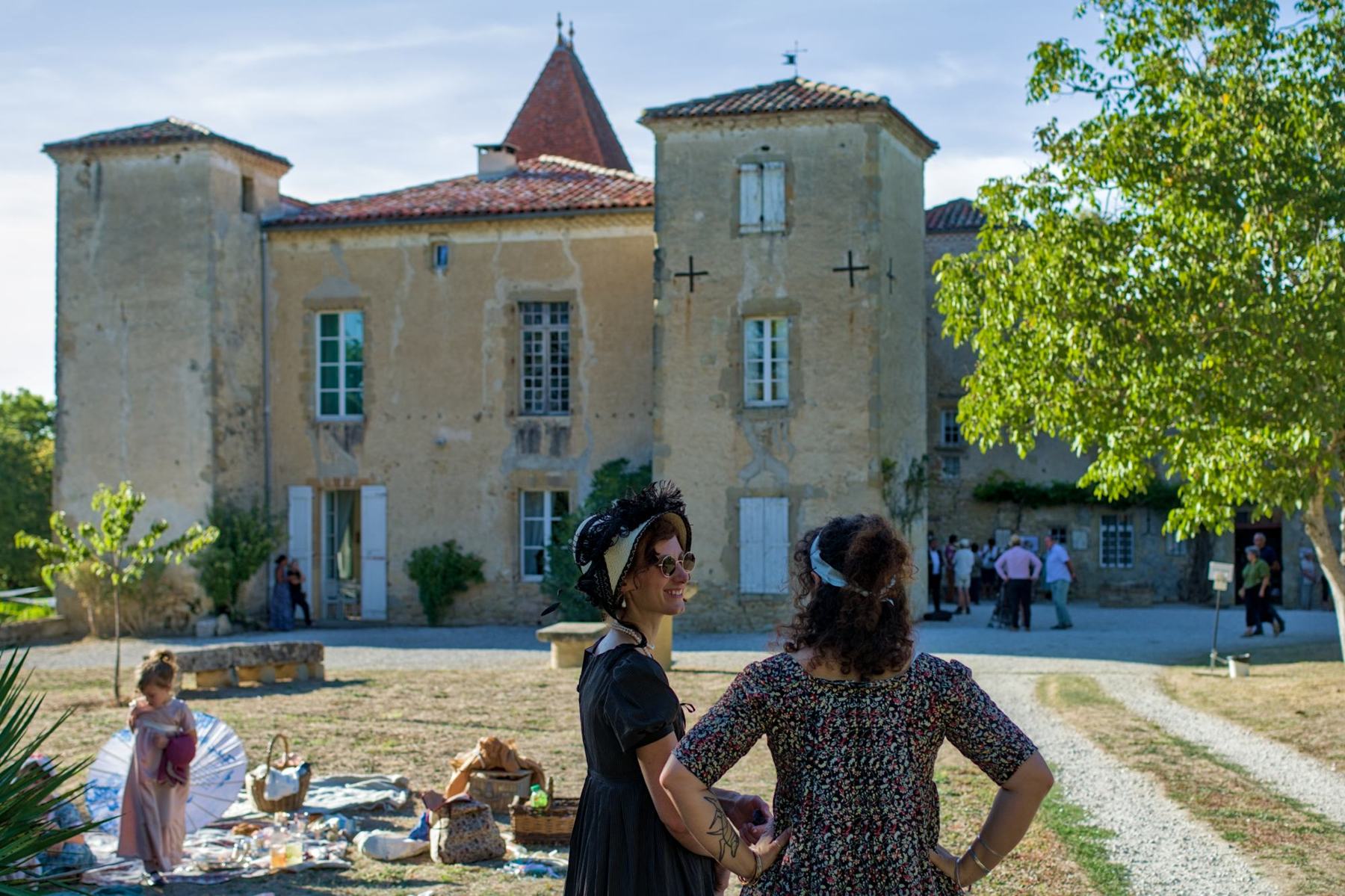
A 14th-century fortified house, received in 1681 by the Caffarel family, who became Caffarelli again. It raised six brothers whom the Revolution and the Empire scattered from Quiberon to Acre. More than three centuries later, the family still welcomes guests here.

Late 14th – early 15th c.Origins
since 1681Caffarel family
General Maximilien CaffarelliFamous figure
Le Falga, Lauragais (31)Location

Timeline

Seven centuries in ten dates

1681

Philippe Caffarel receives Le Falga

A lawyer at the Toulouse parliament, he receives the ruined estate from Pierre de Soubiran and undertakes major works, including the monumental staircase.

Philippe Caffarel receives Le Falga
I

A fortified house in the Lauragais

The church of Le Falga is mentioned as early as 1318 and the village had two consuls in 1384. The south tower, the oldest part of the château, dates from this period, the late 14th or early 15th century. An arrow slit still defends the façade, a gun loop the windward side. Vaulted rooms on the ground floor; upstairs, one large space for the lord and his family.

In February 1570 the Protestant army crossed the Lauragais. Caraman was retaken, Cuq and Auriac destroyed, as was the church of Le Vaux and its annex at Le Falga. The château then belonged to Jacques and Jeanne Vernès, Protestants. Centuries later, Marie-Laure de Caffarelli found at the bottom of the well a carved chrismon, intact and blackened by silt — perhaps torn from the church of Le Vaux and thrown there never to be seen again.
II

1681: the Caffarel raise a ruin

The first of them, Scipion Caffarelli, came from Italy in 1532 in the retinue of Catherine de’ Medici, betrothed to the future Henri II. The family settled in Montpellier, gallicised its name to Caffarel and converted to Protestantism. In 1681 Philippe Caffarel, a lawyer at the Toulouse parliament, received the estate of Le Falga from Pierre de Soubiran in settlement of debts. It was in ruins: a meticulous inventory — a true “photograph” of 1681 — found only three rooms in good condition.

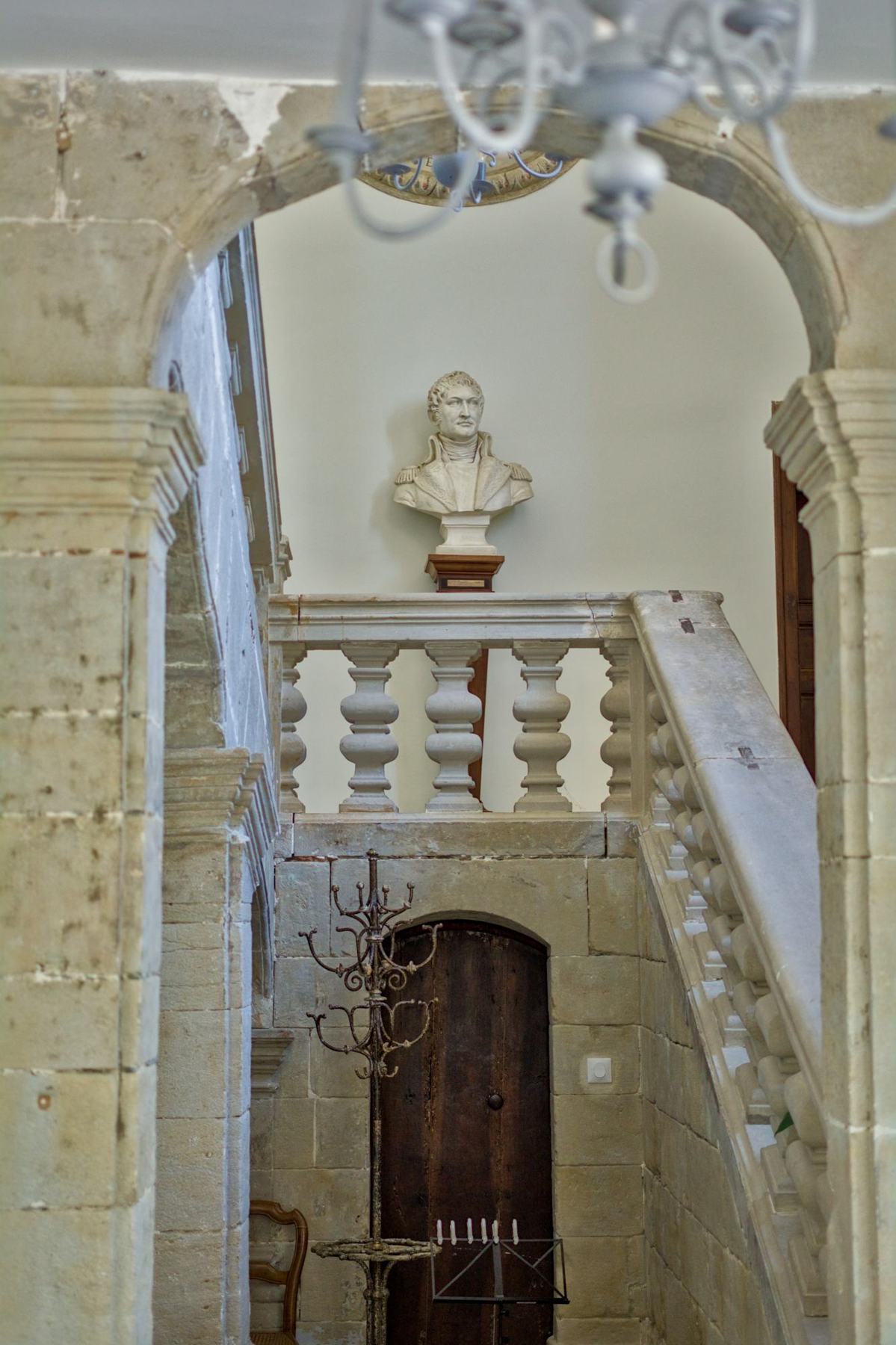
Philippe turned the old stable into a hall and built a monumental staircase with straight flights around an open well: a stage where everyone is both actor and spectator, a brilliant sign of success. Its pillars and banister match those of the bishop’s palace in Castres.

Le grand escalier de 1681 et le buste de Maximilien Caffarelli
III

Pierre-François and his twelve children

The family arms, from the bookplate “de la Bibliothèque de Mr de Caffarelli” kept at the château.

In 1739 the Conservators of the Roman people recognised the family’s noble origins: the Caffarel became Caffarelli again, although the French crown never acknowledged it. From 1750 to 1766 Pierre-François enlarged the estate fivefold and turned the house around: the old entrance became a scullery and a tower rose with its writing room.

Married in 1755 to Marguerite-Louise-Félicité d’Anceau, he had twelve children in eleven years. For these six boys of minor, penniless nobility there was one strategy: excellent schooling at the abbey-school of Sorèze.

Close to the château

Sorèze, the Caffarelli brothers’ school

The boys studied at the Sorèze school between 1765 and 1783. Their busts still stand in the abbey-school’s Hall of Illustrious Pupils, and their name is written in gold on the roll of careers. A must-see during your stay.

Salle des Illustres, abbaye-école de Sorèze Cour de l’abbaye-école de Sorèze Tableau des carrières de Sorèze où figure le nom Caffarelli
IV

Six brothers in the storm

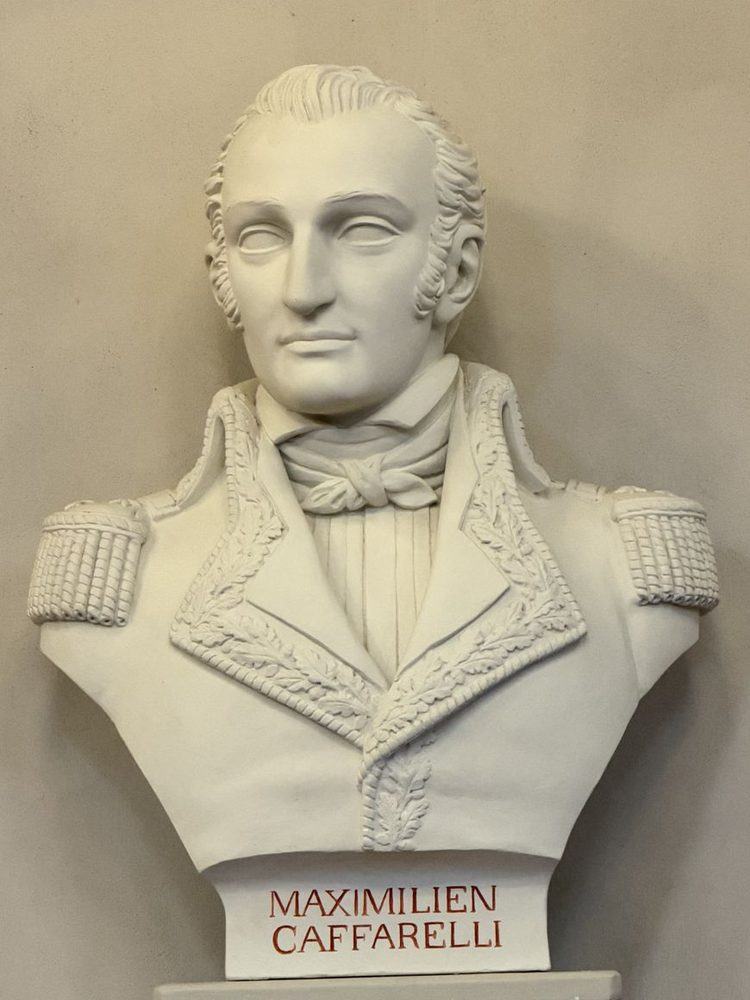
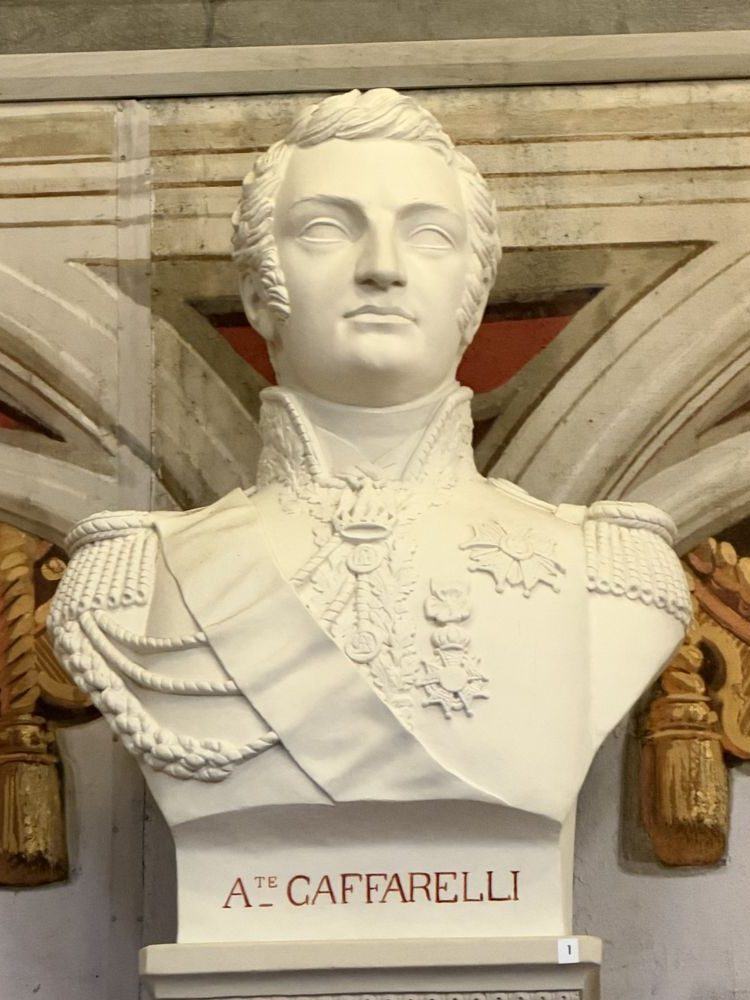
Same education, opposite fates: two emigrated, four served the Republic and then the Empire. Yet they stayed close. Busts from the Hall of Illustrious Pupils, Cité de Sorèze.

Buste de Maximilien Caffarelli, salle des Illustres de Sorèze

Le Falga 1756 – Acre 1799

Maximilien

Engineer general

Wrote a declaration of the rights of man, spent fourteen months in prison in Toulouse, lost a leg crossing the Rhine. Commander of engineers of the Army of the Orient, he died before Acre. Member of the Institut d’Égypte.

Buste de Joseph, known as de Merville Caffarelli, salle des Illustres de Sorèze

Le Falga 1760 – Lavelanet-de-Comminges 1845

Joseph, known as de Merville

Maritime prefect of Brest

A sailor in the American War of Independence and mayor of Le Falga in 1792, he reorganised the Brest arsenal from 1800. Count of the Empire, grand officer of the Legion of Honour.

Buste de Jean-Baptiste Caffarelli, salle des Illustres de Sorèze

Le Falga 1763 – Saint-Brieuc 1815

Jean-Baptiste

Bishop of Saint-Brieuc

Canon of Montpellier and a refugee in Spain during the Revolution, he was consecrated bishop of Saint-Brieuc in 1802. Baron of the Empire.

Buste de Auguste Caffarelli, salle des Illustres de Sorèze

Le Falga 1766 – Leschelle 1849

Auguste

Aide-de-camp to the Emperor

Fought at Marengo, persuaded Pius VII to come and crown Napoleon, governed the Tuileries, then escorted the Empress and the King of Rome back to Vienna in 1814. Peer of France.

C

Charles, the builder prefect

Canon of Toul, prefect of the Ardèche, Calvados and Aube; he embellished the church of Le Falga until his death in 1826.

P

Philippe, the royalist

An émigré, he landed at Quiberon with the royalist army and was executed.

Maximilien’s body never came home to Le Falga. Only his arm returned and was buried in the church… until Auguste took it with him and was buried beside it in 1849.

V

From the Guiraud back to the Caffarelli

With no dowry for Virginie, only daughter of Charlotte Caffarelli, her uncles and aunts made her their heir: on her marriage to Melchior Guiraud the whole estate passed to the Guiraud family. In the 19th century the state room became a library, an orangery opened in the west tower and the farmyard gave way to the open space in front of the château today.

In 1998 Marie-Laure de Caffarelli bought the house back. Le Falga has in fact never left Philippe Caffarel’s descendants.

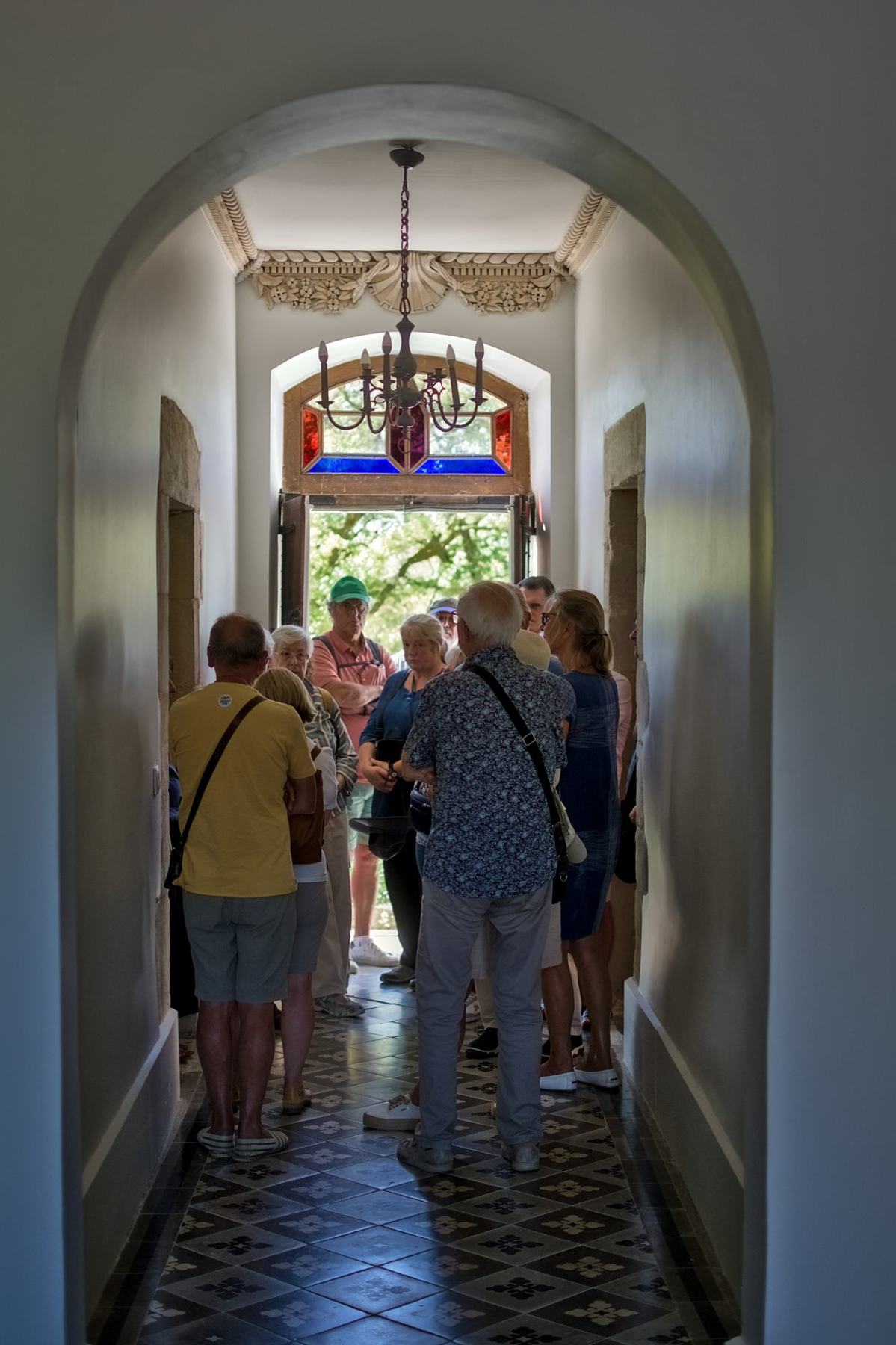
Porte du château et son imposte à vitraux Couloir voûté du château Cour du château

Also worth seeing

The church of Saint-Martin du Falga

A devout Catholic, Félicité d’Anceau turned a barn into a chapel and planted an avenue of elms — to welcome Napoleon one day, says family legend. In 1804 the family gave it to the village as its parish church.

Charles gave it a coffered ceiling and an altar of Caunes-Minervois marble, completed in 1826. Restored after a lightning strike in the late 20th century by the architect Jacques Villemur, it can be visited during the Heritage Days.

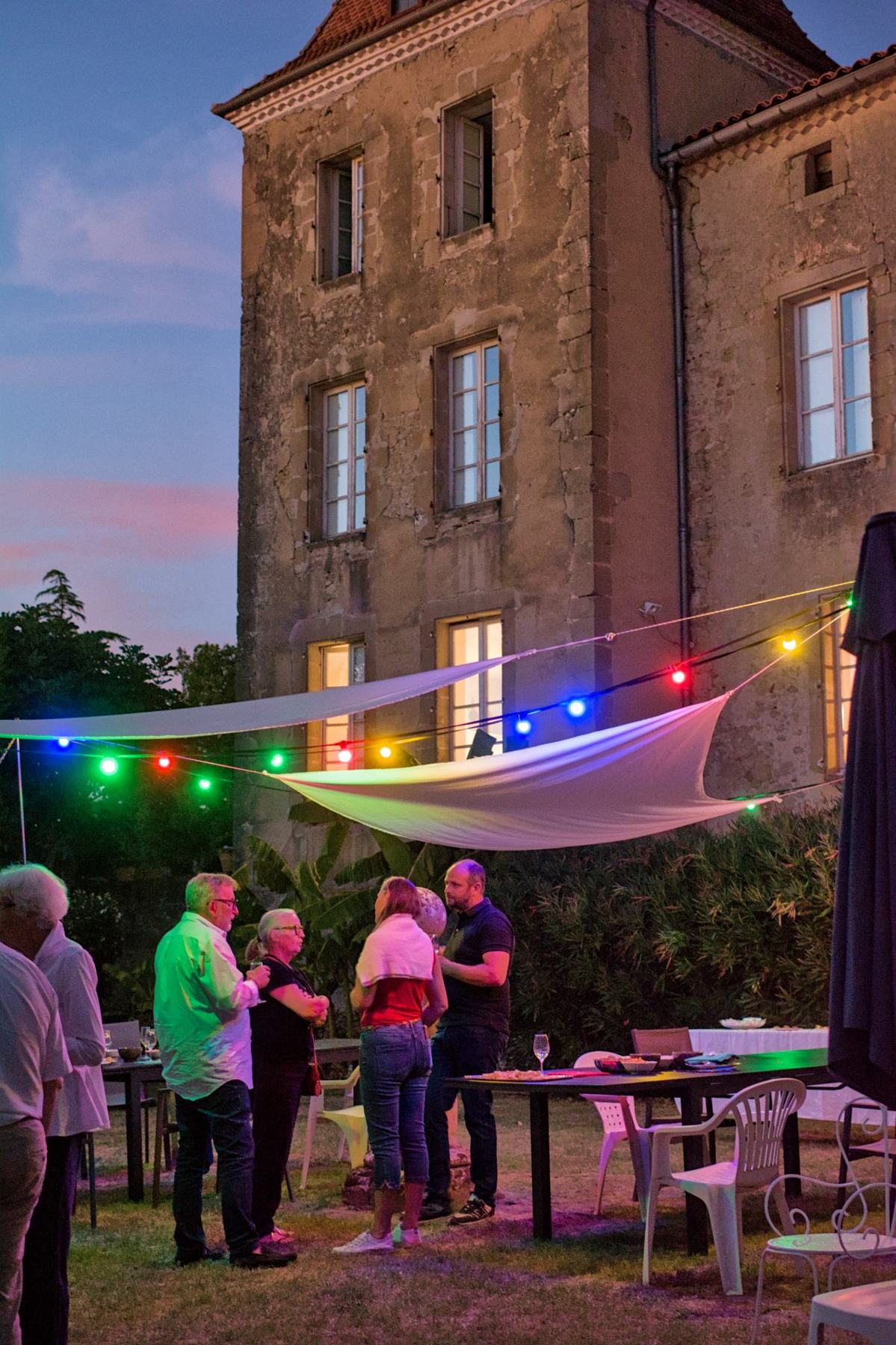
Le château au crépuscule

Sleep in history

The château is rented in summer, by the week or for a weekend, for 21 guests. The Little House, rented separately, sleeps 4 all year.

Sources: Caffarelli family archives, 1681 inventory, Cité de Sorèze notices (Hall of Illustrious Pupils).